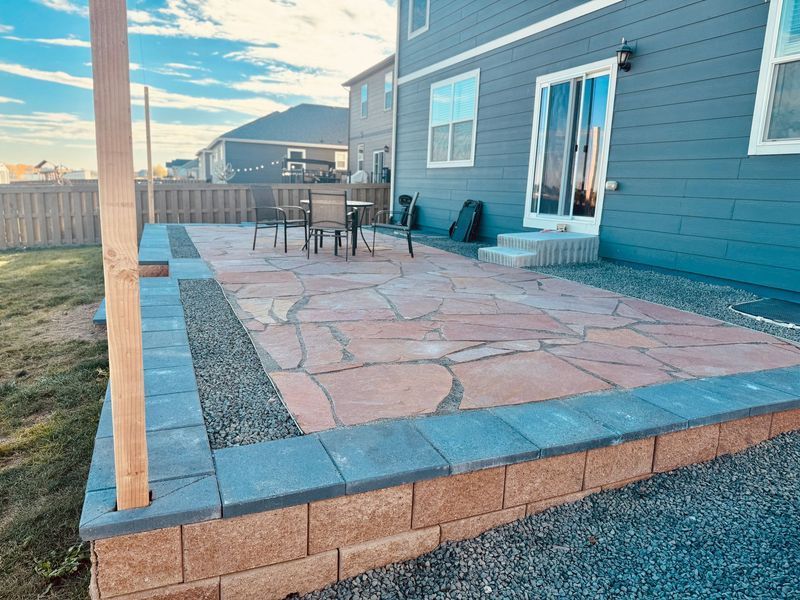
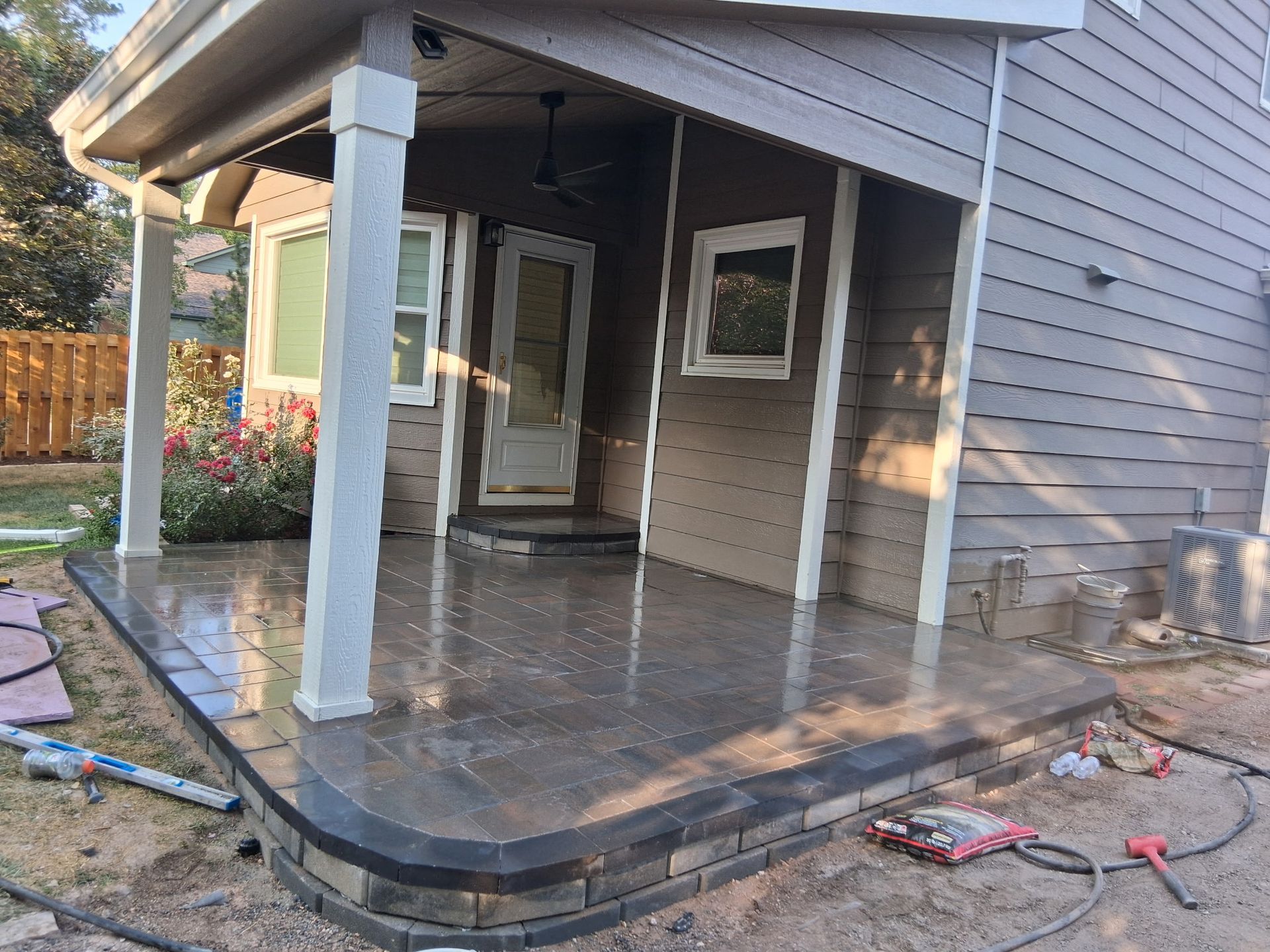
Custom Patios Built for Northern Colorado Backyards
Pavers, flagstone and fire pits, designed and installed by one local crew. Free design and quote.
Plan Your Dream Yard With Us
Think we're a good fit for you? Enter your email for a free custom plan & quote.
Contact Us
We will get back to you as soon as possible.
Please try again later.
Greeley, CO
80634
- Mon - Fri
- -
- Sat - Sun
- Closed
Common Questions About This Service
Depends on size, material (pavers or flagstone), how much digging and base work the site needs, and add-ons like seat walls, steps or a fire pit. Every quote is itemized, so you'll see exactly what you're paying for.
How long does installation take?
Most patios take about 4 days once we're on site. Larger projects with walls or steps take longer. We'll give you an estimated start date and install schedule when you approve your quote, and you can reserve your spot with a 5% deposit.
Pavers or flagstone — which should I choose?
Pavers are uniform, easy to repair and good for clean, modern layouts. Flagstone is natural stone with an organic, one-of-a-kind look. Both last for decades when they're built on the right base. We'll bring samples and help you pick what fits your home and budget.
What makes your patios last?
It comes down to what goes under the patio. We excavate, compact a gravel base in layers and grade for drainage so water runs away from your house. Colorado's clay soil and freeze-thaw cycles ruin patios built on a shortcut base. We don't take that shortcut.
Do you design it too, or just install?
Both. We design your patio, plan how it connects to the rest of your yard, and build it with our own crew. You work with one company from the first sketch to the final walkthrough.
My HOA requires approval. Can you help?
Yes. We put together the drawings, material details and plant lists most HOA and ACC boards ask for, so your submission is complete the first time.
Are you insured?
Yes. Of The Tower Landscape Services is fully insured and has been building landscapes in Northern Colorado for 6 years.
What areas do you serve?
We're based in Greeley and build patios throughout Windsor, Loveland, Fort Collins, Timnath and Johnstown. Not sure if you're in range? Send us your address and we'll let you know.
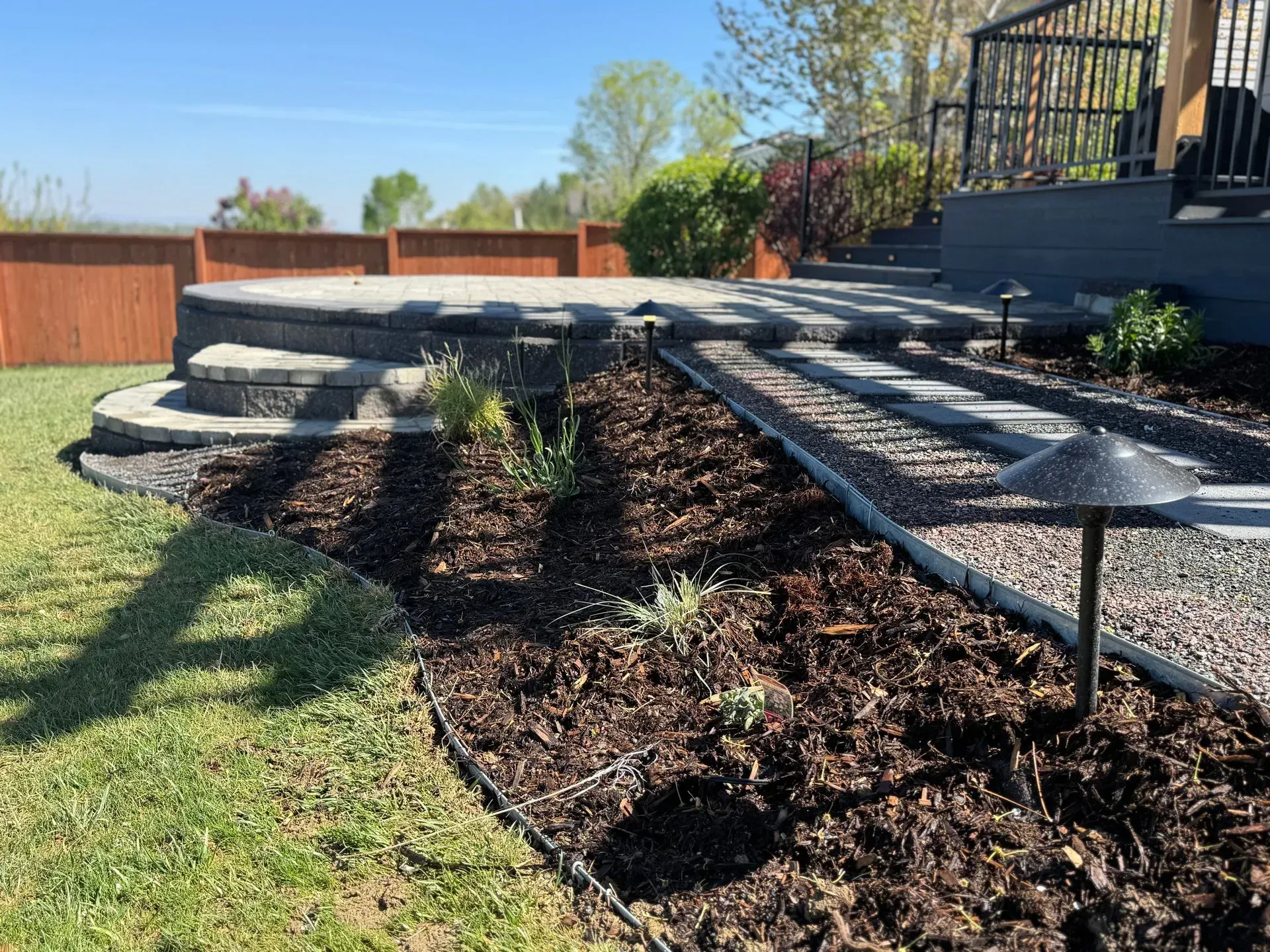
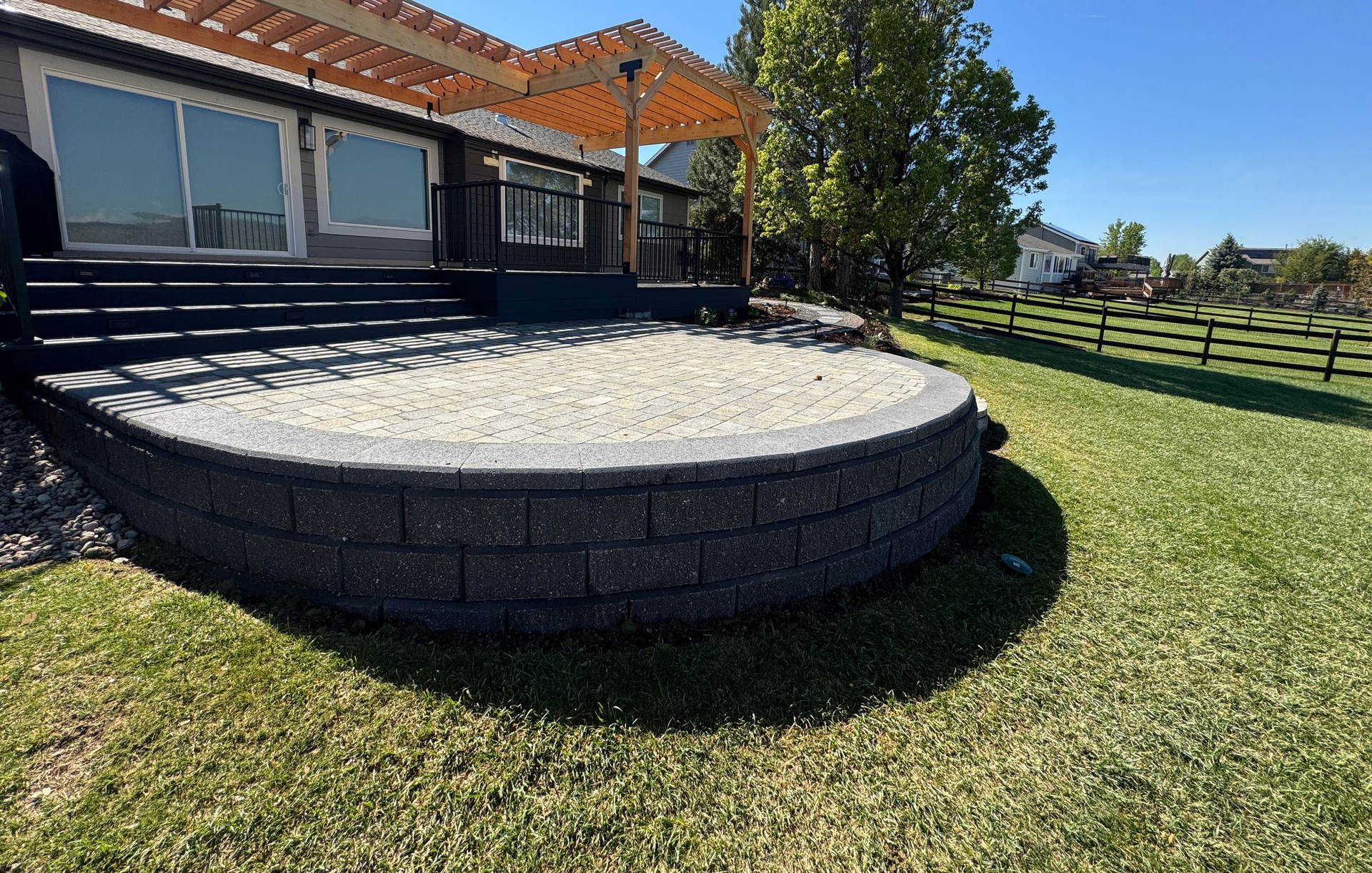
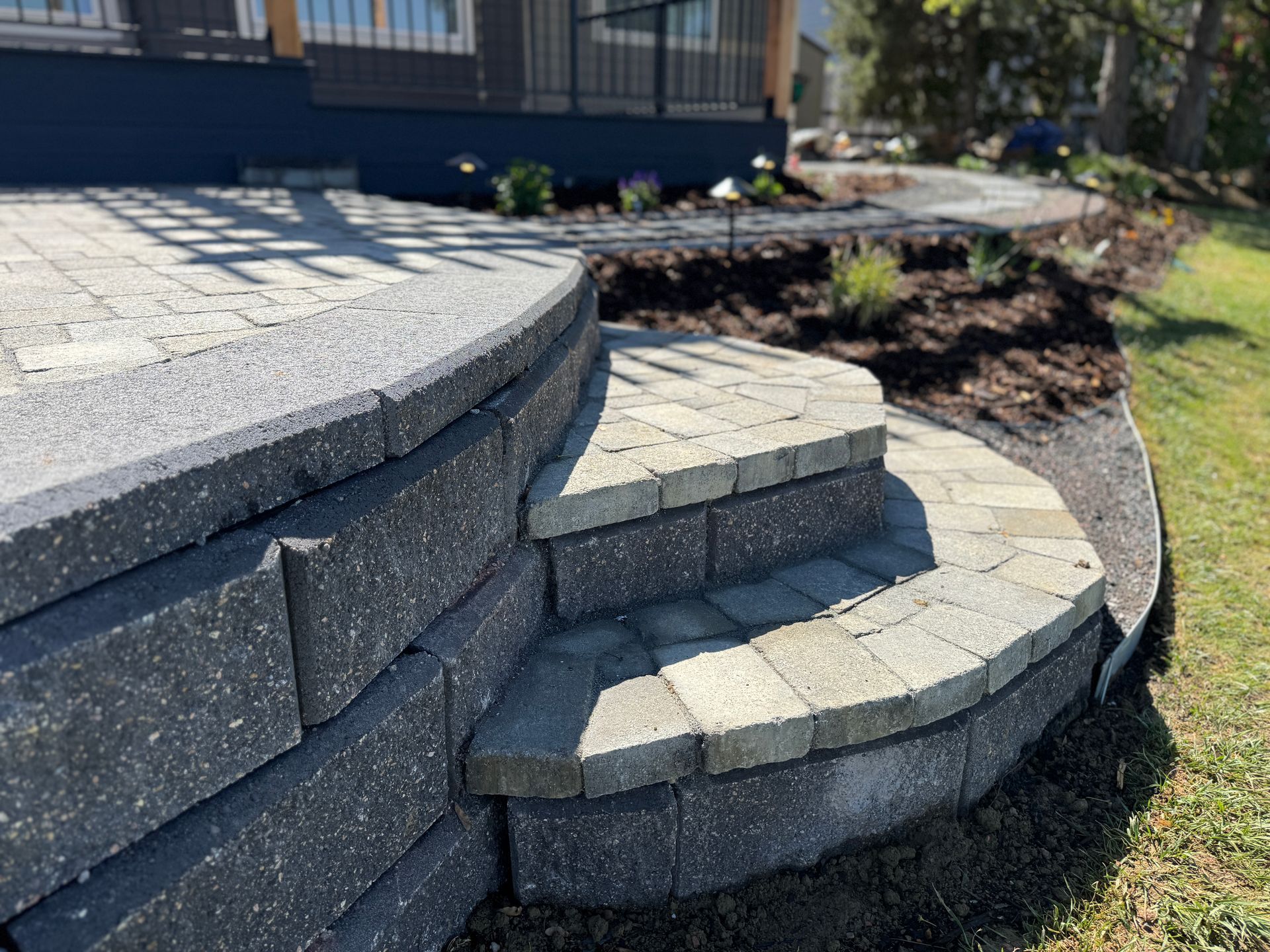
Of The Tower Landscape Services builds patio installations that function as permanent outdoor living areas within water-conscious landscape designs. Request a detailed estimate to review material options and base specifications for your property's soil and drainage conditions.
Paul Bowles
I wish I could give a score of 100 stars. Of The Tower Landscaping is fantastic! From the initial consultation to the finished product they were always informative and let me know what was happening at all times. I would highly recommend OTT for all of your landscaping!
Leanne Guarnieri
We hired Of the Tower for a tree trimming project and some general weed/yard cleanup and they were great. Very communicative, showed up on time, reasonably priced, and quality work. Thank you!
Diane Ken Riggins
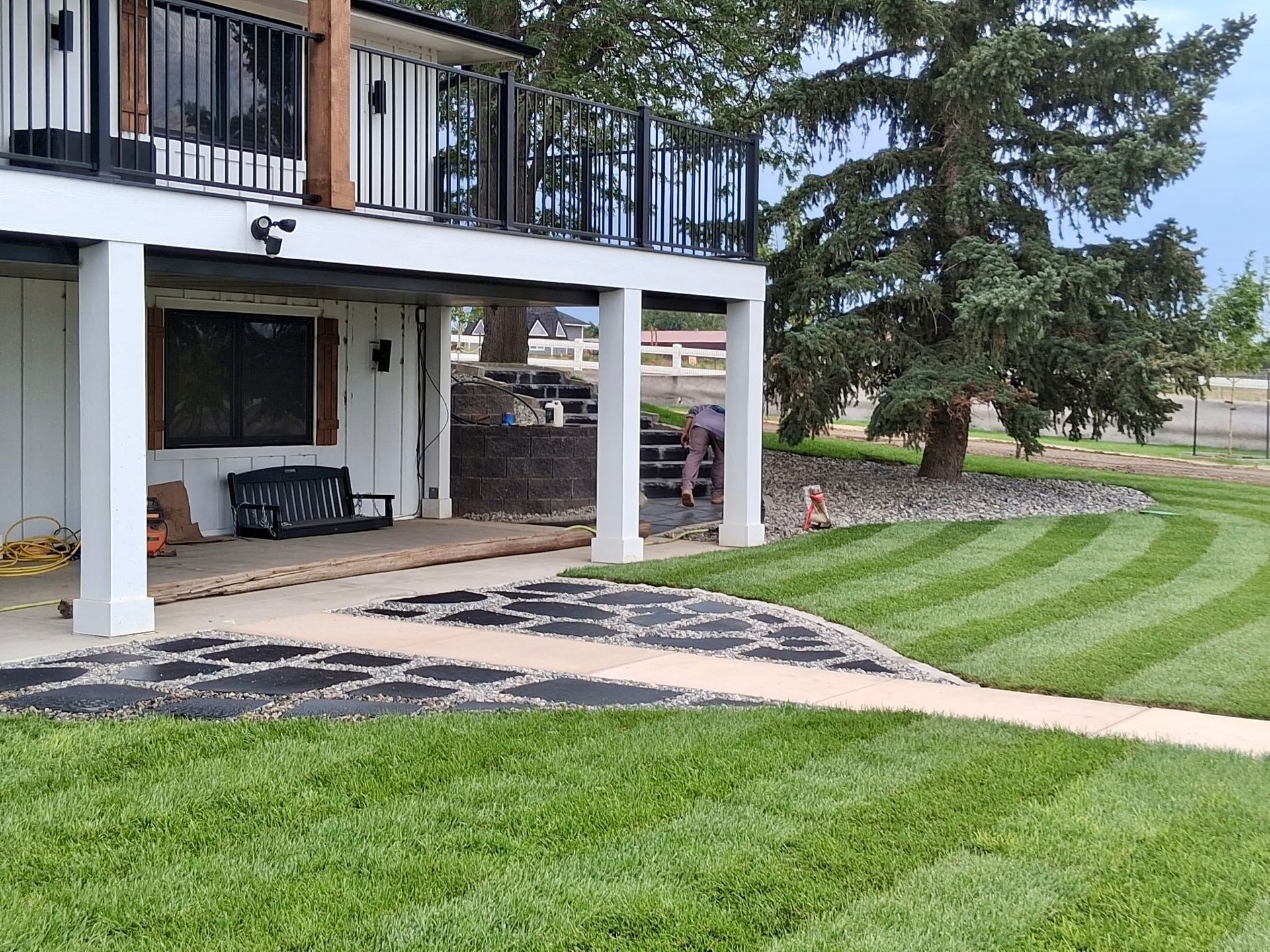
The design that they came up with for my sloped lawn was outstanding and will help conserve water throughout the year. The crew did a great job at updating the irrigation system and installing the new lawn and landscape features.
Paul Bowles
I wish I could give a score of 100 stars. Of The Tower Landscaping is fantastic! From the initial consultation to the finished product they were always informative and let me know what was happening at all times. I would highly recommend OTT for all of your landscaping!
Leanne Guarnieri
We hired Of the Tower for a tree trimming project and some general weed/yard cleanup and they were great. Very communicative, showed up on time, reasonably priced, and quality work. Thank you!
Megan Cierzan
Joanna, Dillon, and the team were amazing. They were super communicative throughout the process and easy to work with.
Our lawn looks beautiful
Alex Goodwin
Joanna and Dillon were both great. Answered any concerns, and were patient with us when they didn't have to be. They installed sprinklers and a walkway around my home. The crew were fast, professional and clean. All around great experience.
Al Pascell
Choosing Of the Tower Landscape Services was the best decision we made. Joanna and Dillon were fantastic, and Joanna’s guidance on our tree, shrubs, and plant selection was spot-on. The final design is stunning, and their crew works with incredible attention to detail—always leaving the site spotless at the end of the day. We’ll definitely be using them again and highly recommend their team!"
Megan Cierzan
Joanna, Dillon, and the team were amazing. They were super communicative throughout the process and easy to work with.
Our lawn looks beautiful
Alex Goodwin
Joanna and Dillon were both great. Answered any concerns, and were patient with us when they didn't have to be. They installed sprinklers and a walkway around my home. The crew were fast, professional and clean. All around great experience.